Palestinian Citizens of Israel
Combatting Violence in Israel’s Arab Communities
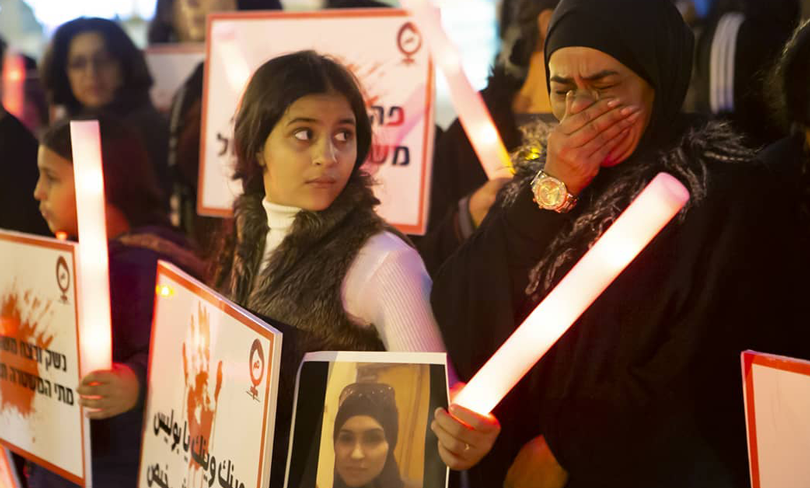
Since the start of the year, more than 200 Palestinian citizens of Israel have been murdered, including two teenagers killed within just six hours of each other; Hussein Mazarka, 17, was stabbed to death during a dispute in Kfar Kara by another student, while Qasem Asala, 18, from Al-Araba in the Lower Galilee, was shot while in the car with his father as he commuted to work. These horrific murders left two families shattered and a community grief-stricken. And these are just two of so many.
The violence plaguing Arab-Israeli society is the result of decades of neglect. Israeli policy has resulted in economic disinvestment in their infrastructure, endemic discrimination and racism, and profoundly insufficient policing, such that the vast majority of murder cases remain unsolved.
According to the World Health Organization, an epidemic is defined when it affects eleven out of 100 people. Under this definition, Arab society has faced an epidemic of violence over the last four years. Despite the grim frequency of this kind of violence, the government has done little to address it. This isn’t mere oversight; it’s deliberate policy. The government largely ignores this crisis because the victims are Arab.
As an organization committed to justice, NIF believes that every citizen has the right to live in safety and security. We recognized the severity of this crisis early on, back in 2018—and made it a top priority to curb violence and crime in the Arab sector, including investing in civil infrastructure.
Among the NIF grantees combatting violence is Ajeec-Nisped, an organization that offers youth leadership training, economic empowerment initiatives, and opportunities for Arab-Jewish collaboration. Last year, NIF also launched a new organizational incubator called Nasij نسيج (tapestry), part of a larger program to reinvigorate Arab civil society in Israel. The program focuses on growing the capacity of mid-size organizations and developing a new generation of Arab-Israeli leaders. Nasij provides participants with a unique combination of grants and training to help them amplify their impact as individuals, as organizations, and within Arab civil society as a whole.
NIF grantees are working tirelessly to uplift communities that have so long lacked the resources necessary to prosper socially and economically. These initiatives and so many more like them are laying the groundwork for systemic change, even as the Israeli government continues to disregard its most vulnerable citizens.