
Human Rights & Democracy
Working in Solidarity with Palestinian Olive Farmers
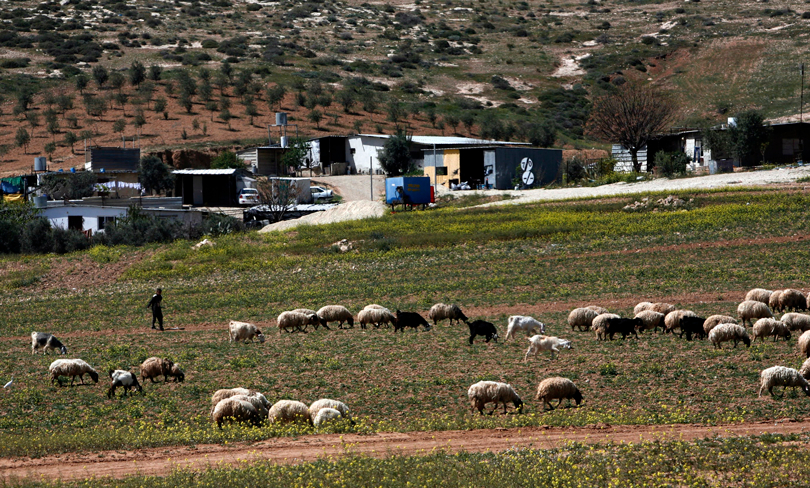
Photo Credit: Eyal Warshavsky
Since the ceasefire in Gaza took effect earlier this month, incidents of settler violence against Palestinians in the West Bank have surged. The uptick has happened as Palestinians attempt to harvest olives, as they do every year from mid-September through November. It is a critical period for the livelihoods of many local farmers.
In response to violence, NIF grantees Rabbis for Human Rights (RHR), Standing Together, Combatants for Peace, and others have been organizing groups of Israeli and international volunteers to pick olives alongside Palestinian farmers across the West Bank. Together they trek into the fields, gathering in the shade of the twisting branches, and then spend the day pulling olives from the trees, letting them drop onto tarps that have been spread on the ground to collect the falling fruit.
“We are here to show solidarity with the Palestinians,“ said Alon-Lee Green, co-director of Standing Together, in a video filmed in the Palestinian village of Deir Istiya and posted to Instagram. “To be a protective presence, to allow Palestinians to have their livelihood, to have their income, to be allowed to harvest their olives, and to be on their own land.”
The increase in violence during olive harvest season is not a new phenomenon; every year, settlers backed by the Israeli army descend upon Palestinian villages in the fall, destroying property, uprooting trees, and physically assaulting farmers and their families. This year, however, the severity has been unprecedented. During the week of October 7–13 alone, the UN Office for the Coordination of Humanitarian Affairs (OCHA) documented 71 settler attacks, more than half of which targeted olive harvests—likely an underestimate. Earlier this week, an American reporter named Jasper Nathaniel filmed a masked settler beating a 55-year-old Palestinian woman unconscious as she picked olives in the village of Turmus Aya, part of a larger rampage that involved more than a dozen masked men wielding weapons.
Settlers hope that this kind of violence will intimidate local families. Their goal is to make Palestinian communities so afraid that they abandon their land, ultimately allowing Israeli settlements to expand unimpeded. Too often, Israeli security forces either actively cooperate with violent settlers or refuse to stop the attacks as they occur. This was the case in Turmus Aya; Nathaniel reported seeing IDF soldiers speeding away from the scene as the attack unfolded. Even in the most severe cases, perpetrators of settler violence are almost never prosecuted; according to Yesh Din, only 3% of investigations end in a conviction.
But the presence of Israeli and international activists can help block, or reduce the severity of, attacks and build solidarity between Palestinian partners and those within Israel who believe in a shared future of equality and cooperation.
“We are doing this to aid the Palestinians, but also to fight together for a reality of freedom, a reality of peace,” Alon-Lee said.
The Israeli government is working hard to prevent the kind of solidarity work that is at the core of NIF grantees’ missions. Over the weekend, dozens of international activists were detained while picking olives with farmers in the Palestinian town of Burin. Days later, Israeli courts ruled that the volunteers would be deported. While Israeli volunteers do not currently face this particular risk, the decision to expel the foreign activists represents an unprecedented escalation against solidarity activists by the state, which made the dubious claim that members of the group were supporters of a recognized terrorist organization.
Despite this kind of blatant intimidation, Rabbis for Human Rights, Standing Together, and Combatants for Peace will keep standing with Palestinian farmers against threats to their livelihoods.
“We will continue to come here, to the South Hebron Hills, to the Bethlehem area, to the Ramallah area,” said Avi Dabush, executive director of RHR, in a video filmed in Burin days after the arrest of the activists. “To fulfill these words: You shall love the stranger. Justice, justice shall you pursue. Seek peace and pursue it. Turn from evil and do good.”