Human Rights & Democracy
Opposing New Construction in the E1 Corridor
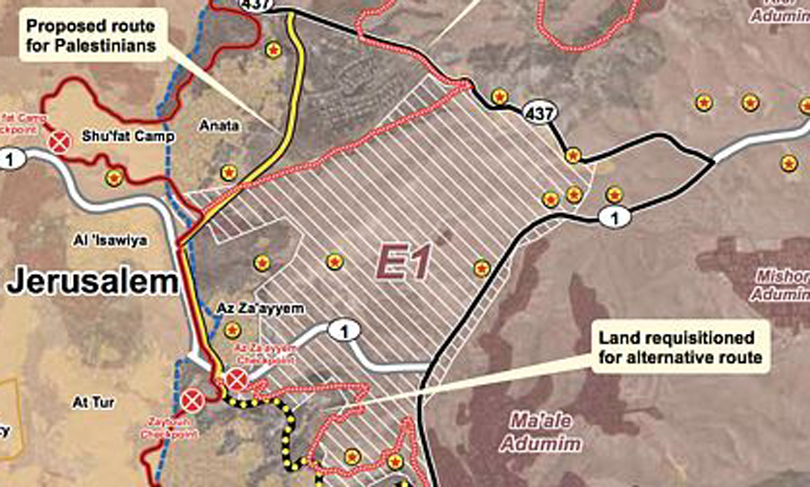
The Israeli government is attempting to construct over 3,000 additional housing units in E1, one of the most contentious and decisive sections of the West Bank. The project, led by the Finance Minister Bezalel Smotrich, would cut the West Bank in half—displacing nearly 4,000 Palestinian residents and making a contiguous Palestinian state essentially impossible. At a settlement conference in May, Smotrich told the audience that the plan to settle E1 would soon move forward. “This is how you kill the Palestinian state de facto,” he said. “God willing, there’ll be [Israeli] sovereignty [in the West Bank] during this term.”
E1 is the narrow strip of land that extends between Jerusalem and the West Bank settlement of Ma’ale Adumim. In March, the security cabinet approved the construction of a separate road for Palestinians, paving the way for Israel to move forward with building in E1 and advancing the de facto annexation of the settlement.
For decades, NIF grantees have advocated for a shared Jerusalem. Some of them, including Ir Amim, ACRI, and Bimkom—Planners for Planning Rights, have been instrumental in demonstrating the harm of not preventing Israeli settlement in the E1 corridor. They have filed petitions and objections in court, and have stood in solidarity with local Palestinians. These efforts, along with pressure from international actors, have successfully delayed the project in the past.
This time, NIF grantee Ir Amim, along with Peace Now, the Association of Environmental Justice, and local Palestinian residents again submitted objections to Israel’s Civil Administration Higher Planning Council. Two weeks ago, they received notice that the council will convene to hear objections to the plan on August 6. They will be there. NIF grantees continue to work tirelessly to maintain E1’s status as a place that could help solve, not impede, a future lasting solution to the conflict.