Human Rights & Democracy
Insisting on Freedom of Speech for All
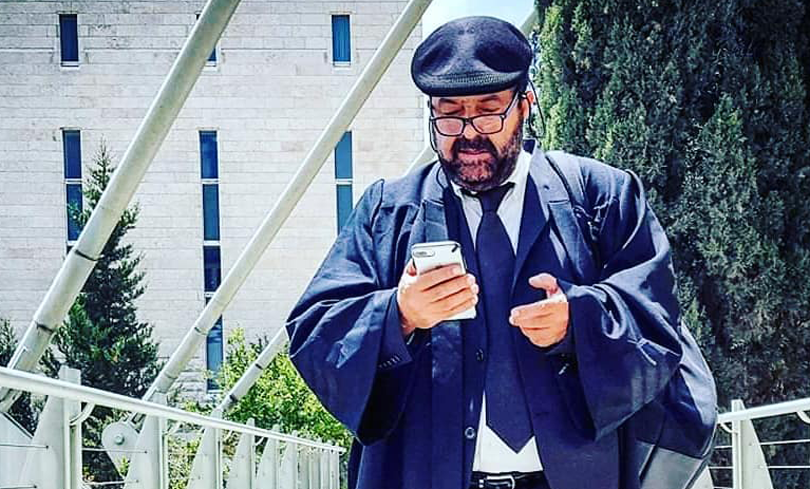
Photo Credit: Adalah
Since the start of the war, the Israeli government, its ministers and various extremist-allied organizations and news outlets have been policing the speech of those who would dissent—in person or online—to their policies. They have threatened to defund public media, have taken to pro-Netanyahu news channels to besmirch journalists, and have arrested hundreds of citizens—especially Palestinian citizens of Israel.
According to a recent report by NIF-supported think-do tank, the Zulat Institute, these moves bear an eerie resemblance to the kind of systematic, strategic repression employed by Hungary’s Viktor Orbán: “Israel is following in Hungary’s footsteps, and the government is formulating a consistent and systematic pattern of action to eliminate free media,” wrote researcher Benzi Sikora. Israel’s Minister of Communications, he added, “has been trying to promote a series of laws over the past two years that would, on the one hand, impose restrictions on the free media in order to make it obedient and disciplined, and, on the other hand, reorganize the media market and subordinate it to economic and political interests.”
The proposed (and some enacted) legislation has been fast and furious: there are bills that would make it much harder for Arab parties to run for parliament, a law that now expands the types of opinions that can get a person banned from entering the country, and another bill waiting in the wings that would restructure media regulation to give the government sweeping control over Israeli broadcasting. Minister Itamar Ben Gvir, meanwhile, has filed a whopping 13 lawsuits against his perceived political opponents, including journalists, in just three years.
In terms of the media market, Israel’s Channel 14, a station notorious for its right-wing coverage (often likened to the U.S.’s Fox News or Newsmax) was offered special dispensations from the Netanyahu government back in 2018 to even become a news channel. Since then, its anchors have repeatedly attempted to discredit any journalism that is not favorable to Netanyahu. After a journalist from Channel 12, Amnon Abramovich, criticised the prime minister, for example, presenter Yinon Magal called him “insolent” and blamed him—on air—for the attacks of October 7, even going so far as to say “the blood is on his hands!” In June of this year, police were needed to extract Abramovich from a mob of right-wing protestors who hurled insults and slurs at him (“fifth columnist,” “traitor,” “dishrag,” “wretch,” and “stinking cinder”) as he tried to cover an event outside the Tel Aviv Museum.
NIF has been working strategically around issues of free speech and press freedom in anticipation of occurrences like this. In the case of Channel 14, researchers from Zulat have been continuously compiling lists of inflammatory statements made on the channel and have already appealed to the Attorney General to penalize it for genocidal rhetoric that violates the terms of their license.
Palestinian citizens of Israel have been hit especially hard by the crackdown on free-speech. Since October 7, hundreds have been arrested for posting opposition to the war on social media or in solidarity with the besieged citizens of Gaza. Universities remain the epicenter for the crackdown, and dozens of students have been suspended or expelled. One major way NIF grantees have been pushing back is through legal advocacy. Adalah – The Legal Center for Arab Minority Rights in Israel, a long-time NIF grantee, is taking on the legal cases of Palestinian citizens of Israel who are being penalized. Adalah’s work has led to over forty acquittals, dropped cases, and exonerations, allowing those charged to return to their schooling. And they continue to take on more cases as they arise.
The Association for Civil Rights in Israel, NIF’s flagship grantee, has also been a major player defending Israelis’ right to express themselves. One example of their work came just recently when hundreds of Israeli artists, among them internationally acclaimed author Etgar Keret and well-known jazz musician Avishai Cohen, signed a petition demanding a ceasefire and hostage deal. In response to the letter, five local politicians, including mayors and regional council leaders, announced that those who signed would not be invited to their cities to perform. ACRI stepped in, filing an appeal to the Ministry of the Interior and the Ministry of Culture and Sports. In it, they requested that the councils remind local authorities that it is not within the purview of local politicians to impose restrictions on artistic content or to boycott artists with whom they disagree politically.
NIF grantees will continue to resist this government’s efforts to repress dissenting speech and fight for the rights of all to express their political views openly.