
Human Rights & Democracy
Ensuring the Right to Protest Against the War in Israel
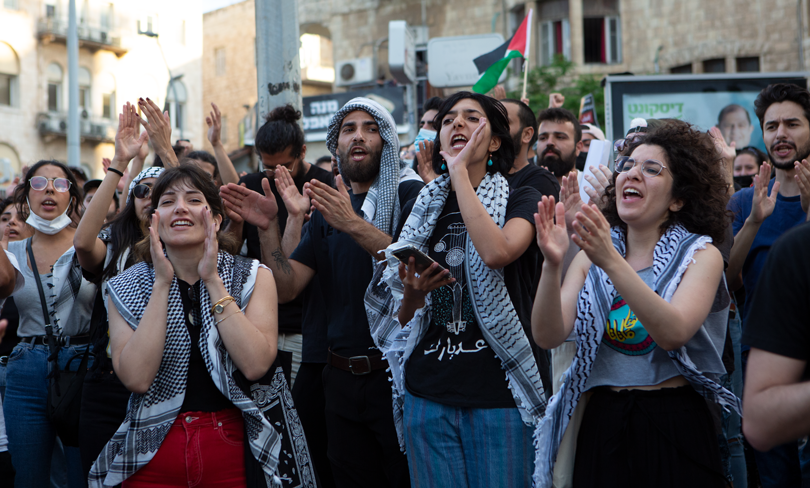
Photo Credit: Mati Milstein
On May 31, 2025, a broad coalition of Jewish and Palestinian citizens planned to gather in downtown Haifa under the banner “End the War – Yes to Peace.” The protest was initiated by the Partnership for Peace coalition—a broad coalition of organizations and activists which NIF supports that all seek an end to the war in Gaza.
But organizing this peaceful demonstration became a battle in itself. Weeks in advance, organizers filed for a permit with the Haifa police, as required. But as the protest date drew closer, they received no official response—despite multiple attempts and even a direct meeting with the local police commander. According to the Association for Civil Rights in Israel (ACRI), this kind of indefinite delay has become a known tactic: by withholding permits until the last moment, the police obstruct organizers’ ability to prepare—and often prevent legal appeals in time.
Compounding the delay, far-right groups caught wind of the planned protest and pressured Haifa’s mayor to cancel it. Following public criticism and legal inquiries by ACRI, the mayor backed down. But when police did issue a permit it came with extraordinary and unreasonable conditions: demands for municipal approval, fenced-off protest zones, a ban on amplified sound, live police surveillance, and more—terms rarely applied to other demonstrations, especially in central Israel.
Just days before the event, ACRI petitioned the district court to remove these barriers and enable the protest—and they won. The court struck down the police-imposed conditions, affirming that the protest could proceed as originally planned.
In subsequent proceedings at Israel’s High Court of Justice, the justices were clear: threats from opposing groups cannot justify restricting the constitutional right to protest. The Court reaffirmed that freedom of assembly applies across Israel; the police have a duty to enable protest, always.
Since the war began, and especially over the past year, ACRI and other civil society organizations have been pushing back against the trend in which police use bureaucratic hurdles to suppress anti-war protests. In some cases, peaceful protesters have been detained or physically removed for holding signs. In others, organizers have been forced to make repeated legal appeals to hold even small demonstrations. But ACRI and other NIF grantees have been there since the beginning, defending the right to protest. We will never stop insisting on peace, justice, and a shared future.