
Human Rights & Democracy
Ensuring Equal Education in Tel Aviv Schools
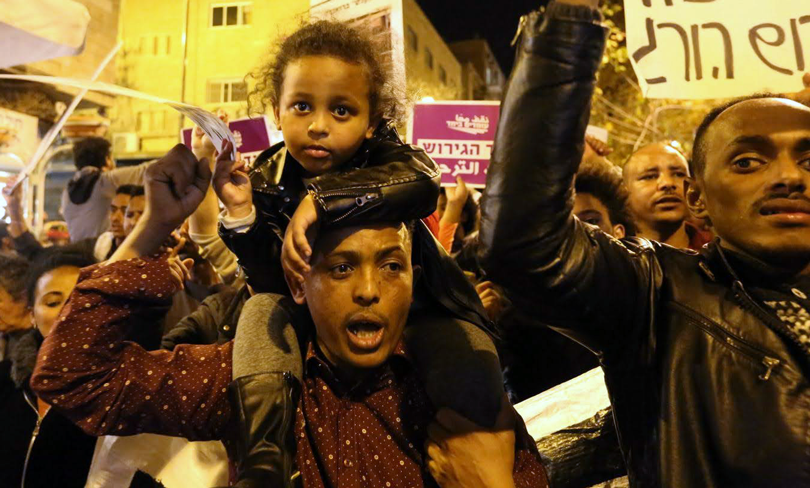
Photo Credit: Yossi Zamir
Last week, NIF’s flagship grantee, The Association for Civil Rights in Israel (ACRI), delivered a small dose of hope: a win for civil rights in Israel. Last week, the Supreme Court ordered the Ministry of Education and the Tel Aviv-Yafo Municipality to integrate the children of asylum seekers in south Tel Aviv into schools with Israeli children. The ruling came in response to a petition filed by ACRI, along with the Clinic for Law and Educational Policy at the University of Haifa, the Levinsky Garden Library, and the ASSAF aid organization on behalf of a dozen asylum seekers whose children attend de facto segregated schools.
According to a 2020 study conducted by Haaretz, 90% of children from the households of asylum seekers study in entirely segregated schools—schools that serve only children of foreign nationals, and no Israeli children at all. In 2023, the Tel Aviv municipality, where most asylum seekers live, launched a short-term pilot program that would bring these children from south Tel Aviv to schools in other parts of the city to study alongside Israeli children. A second Haaretz study, which examined the program’s outcomes, found that participants consistently reported better academic performance, and higher levels of self-esteem. It was also noted that the effort boosted tolerance among their Israeli peers as well. Last week’s ruling will formally require the municipality to find a long term, comprehensive solution to the de facto segregation that has existed in Tel Aviv schools for years.
Attorneys Eran Reichman and Tal Hassin, who represented the Clinic for Law and Educational Policy and ACRI respectively, said in a statement: “This is a fantastic ruling, fully affirming what we have long argued: segregation in education based on origin and skin color is illegal and unacceptable. No pilot is needed…to understand that separate is not equal. No experiment is needed to understand that all students benefit from studying together. Hopefully, this decision paves the way for dismantling the educational ghettos where asylum seekers’ children have been placed.”
For decades asylum seekers in Israel—most of whom came to the country after fleeing violence in Eritrea and Sudan—have been pushed to the absolute margins of society. Denied refugee status in almost all cases, they tend to work low-paying, unstable jobs that leave them vulnerable to physical and emotional abuse, wage theft, and poverty. Most asylum seekers in Tel Aviv live in the poorest neighborhoods in the south of the city and send their children to underfunded local schools. This ruling is a small but important victory in combatting the marginalization of some of the most vulnerable members of Israeli society.