
Human Rights & Democracy
Documenting Looting in West Bank Palestinians’ Homes
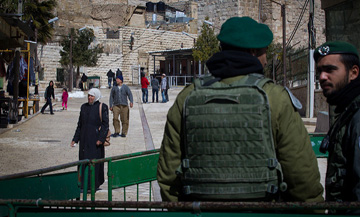
NIF grantees have been documenting Israeli soldiers’ abuses of Palestinians for decades. But in recent months, those human rights organizations have seen a dramatic rise in both the incidence of violence against Palestinian residents of the West Bank and in that of a lesser-discussed crime: pillaging.
Pillaging is a crime under international law. It is one that soldiers around the world violate, and Israel is no exception. But, as a report published last week by Yesh Din documents, the problem has become utterly rampant in the West Bank since October 7. Israeli soldiers and other security personnel are looting all kinds of Palestinian property—things like cash, jewelry, and heirlooms. “Yesh Din has documented such cases for over two decades,” the organization writes in the report. But the growing number of incidents “suggests that normalization of these practices in the Gaza Strip since October 2023 has spread to the West Bank.”
Researchers on the project documented dozens of complaints from Palestinians living in the West Bank who reported soldiers and police officers using both checkpoint stops and nighttime home searches as a pretense to steal valuables. Under Israeli military law, security personnel are allowed to conduct such searches with little or no oversight, leaving Palestinians particularly vulnerable to abuse. When victims report incidents of looting, Yesh Din found, the chance that the complaint will result in prosecution is “nearly zero.”
The report presents Palestinian testimonies from five incidents of theft in which soldiers stole large amounts of cash and other valuables, often while threatening the victims with violence. One man reported that soldiers stole thousands of shekels of cash and checks as they searched his car. They then told him to drive away, and threatened to shoot him if he turned back. Another reported that a search of his property took place while no one was present, with a neighbor witnessing soldiers forcibly entering the home. When the homeowner returned, he found thousands of shekels worth of gold jewelry was missing and that the house was in disarray. “Closets had been damaged, property destroyed,” he said. “Everything taken out the closets and thrown on the floor, tiles broken.”
While the world’s focus has remained on the destruction in Gaza, Palestinians in the West Bank continue to experience a precipitous uptick in violence. Settlers, emboldened by the rhetoric and policies of radical messianic politicians like Itamar Ben Gvir and Bezalel Smotrich, have been harassing, intimidating, and even murdering Palestinian civilians with near complete impunity. Since the start of the war, more than a thousand people have been forced to flee their land, fearing violence from armed groups of settlers. The tactics of these groups are varied but often include descending upon Palestinian villages to destroy crops; steal livestock; beat civilians with rocks, batons, and other weapons; and to burn houses, community buildings, and vehicles. Last week a 40-year-old man named Khamis al-Ayyad died of smoke inhalation after attempting to extinguish a fire set by settlers in the town of Silwad, outside Ramallah. He was one of more than a thousand Palestinians who have been killed in the West Bank since October, 2023.
Yesh Din’s work documenting the impact of the occupation on the lives of Palestinians—especially in the wake of October 7—has been instrumental in allowing the international community to track and respond to incidents of violence in the West Bank. It is among the NIF grantees that continue to do the hard work of both documenting attacks and pursuing justice for Palestinians.