Human Rights & Democracy
Advocating Effectively for Social Change
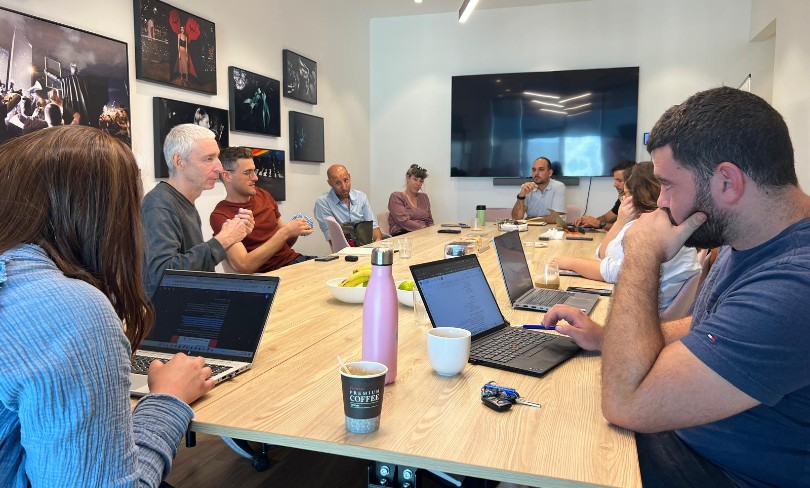
16 staffers from NIF grantees such as The Abraham Initiatives, IDEA: The Center for Liberal Democracy, and Israel Hofsheet (Be Free Israel) took part in a training, where one of their tasks was to become the politicians of Israel’s right and center–from Benny Gantz to Avigdor Lieberman. This training, entitled “Building Relationships to Advance Policy Promotion”, was created by Shatil’s Center for Policy Change (CPC) and led by Anat Ofek. Each participant assumed the role of a specific minister in a hypothetical version of Israel’s next governing coalition.
Among other skills, these staffers learned how to identify and build relationships with the “change-makers” best positioned to champion their objectives in the political arena, even with politicians they might not readily view as allies.
Guest speaker and former Minister of the Environment Tamar Zandberg emphasized the need for social change lobbyists to be better prepared when approaching potential change-makers. Subsequent sessions outlined how lobbyists can identify the right politicians and approach them with appropriate messages and materials to advance their objectives. In crafting the simulation, Anat deliberately created a hypothetical government rather than mimicking Israel’s current governing coalition. “We want to train these organizations to look forward and plan ahead,” she said. “The Bennett-Lapid government (which preceded the current Netanyahu government and included leftist and centrist parties) served as an invaluable learning experience. We realized that the progressive movement wasn’t experienced in working with people in our own camp because we were so accustomed to working with the opposition. In other words, they hadn’t come prepared, with proposed laws written in advance for example, and thus had not succeeded in advancing policies to the extent that they had expected. Now, we understand that part of the CPC’s responsibility is to ensure the center-left is ready to leap into action the next time we have allies in government.”
Moving in and out of breakout groups, or “committee meetings,” these “Members of Knesset (MKs)” were tasked with passing a national budget and establishing an agenda for their first months in office. As “Prime Minister,” Gantz was facing “Foreign Minister” Avigdor Lieberman, amidst a lively debate over funding allocations in light of impending war in the North.
In the real world, organizations sometimes only have between twenty-four to forty-eight hours to craft a cohesive response to a Knesset decision. Not only did this simulation provide a deeper understanding of the governmental processes within the Knesset, it allowed for staffers across different organizations to create meaningful bonds. When there is often such a tight window to move ahead, the kinds of partnerships created during this training create a stronger future foundation for working collaboratively to respond in time.
Anat discussed the importance of Shatil’s role in this work: “[We look] at the bigger picture. We’re able to identify opportunities for collaboration across the center-left movement. In the long-run, we hope this will help civil society organizations and political change-makers see each other as potential partners who can work together to accomplish shared objectives.”